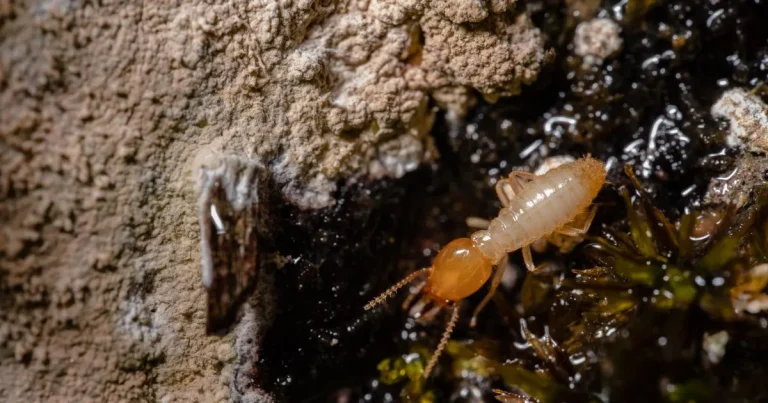

You’re cleaning around the garage or moving a pot plant, and you notice a thin, earthy line running up the wall. It looks like dried mud. That’s often a termite mud tube, and it’s one of the most reliable signs that termites are active nearby.
Finding one can be worrying, but the right response is simple. Here’s what mud tubes are, what to do and what to avoid.
What are mud tubes?
Subterranean termites need moisture and darkness to survive. When they have to cross an open surface, like a brick wall, concrete slab or pier, they build protective tunnels from soil, saliva and droppings. These tunnels are called mud tubes, mud leads or shelter tubes.
They’re usually about the width of a pencil, but can be wider. You might find them along slab edges, inside garages, on piers in a subfloor, in roof voids, or running up fences and tree trunks.
Step 1: Don’t break it open
It’s tempting to scrape away the tube to see what’s inside. Try not to. Breaking a tube disturbs the termites, and they may abandon that route and find another way in that’s harder to find.
If you’ve already broken one, don’t worry. Just leave it alone from now on. Termites often repair broken tubes, which can actually help a technician confirm they’re still active.
Step 2: Don’t spray it
Household insect sprays won’t reach the colony. They may kill a few termites in the tube but can cause the rest to move elsewhere. That makes professional treatment harder and can delay a solution.
Step 3: Take photos and notes
- Photograph the tube from a distance and up close
- Note exactly where it is and where it leads
- Check nearby timber for soft spots, but don’t break it open
- Note any other signs, like sticking doors or hollow skirting
These details help your technician plan the inspection.
Step 4: Book an inspection
A professional termite inspection confirms whether the termites are active, how widespread they are and where they’re coming from. Technicians use moisture meters, thermal imaging and sounding tools to check behind walls without causing damage.
What if the tube is empty?
Sometimes mud tubes are old and abandoned. That doesn’t necessarily mean the termites have gone. They may have found a different route, or the colony may still be active elsewhere on the property. An inspection is the only way to know for sure.
Types of mud tubes
- Working tubes: run from the soil up walls, slabs or piers into timber. These are the most common.
- Exploratory tubes: thin tubes that branch out from the soil, often not connected to timber.
- Drop tubes: hang down from timber towards the ground, sometimes seen in subfloors and roof voids.
All types are a sign of termite activity nearby and should be checked by a professional.
Is the activity current?
Old, dry tubes may be from past activity, while fresh, moist tubes suggest active termites. A technician can tell the difference. If tubes are broken, termites sometimes repair them within days, which is one way inspectors confirm current activity.
Common places to find tubes
Look along the slab edge, in garages, behind stored items, on brick piers in subfloors, around plumbing and drainage penetrations, on fence posts and on the inside of cupboards and wardrobes against external walls.
What treatment might involve
If termites are active, treatment may include direct treatment into the workings, baiting or a soil barrier around the home. Your technician will explain options in your report and help you choose. See our termite treatment page for more detail.
Next steps if termites are active
If the inspection confirms active termites, your technician will explain your termite treatment options and what each involves. Once the colony is under control, ask about long-term termite protection options to reduce the risk of termites returning.
Found a mud tube?
Leave it undisturbed and call Your Pest Experts on 08 6245 3186. We’ll book a termite inspection and help you take the right next step.
Keep reading: Termites in Perth: A Plain-English Guide for Homeowners. You can also visit the Your Pest Experts homepage.
Frequently asked questions
Do mud tubes always mean termites?
Mud tubes are a strong sign of subterranean termites, but some other insects build similar structures. An inspection confirms what made them and whether they’re active.
Should I break open a mud tube?
It’s best not to. Breaking a tube can disturb termites and make them move. Leave it intact for your technician to check.
How fast do termites build mud tubes?
They can build or repair tubes quite quickly, sometimes within days. Fresh repairs to a broken tube are often a sign termites are still active.
Can I treat mud tubes myself?
No. Household sprays won’t reach the colony and may make the problem harder to treat. A licensed technician should inspect and recommend a treatment plan.
Where do termites usually build mud tubes?
Common spots include slab edges, garage walls, subfloor piers, roof voids, fences, retaining walls and tree trunks.